For a Gledhill PulsaCoil fault in Orpington, book a specialist diagnosis and confirm local attendance before authorising work. A thermal store is a unit that stores heated water and transfers its heat to mains water through a heat exchanger.
Losing hot water can disrupt washing, cooking and the household’s daily routine. An electrical issue or a leak also needs careful attention, since the cause may sit inside the unit rather than at a tap.
A specialist can assess the fault and explain which work may be suitable. Before arranging a visit, confirm that the provider attends your postcode; a stated service area does not guarantee attendance at every address.
If you need help today, describe the problem clearly and ask what assessment is available. The time involved and the price depend on the fault and the work required, so get the scope before approving repairs. Note the model name and the symptoms before arranging an assessment.
Pulsacoil Repair Orpington: Local Service and Coverage
Orpington sits within the London Borough of Bromley, so check that the engineer can attend your specific address. Orpington is also part of Greater London, but a provider’s London-wide service statement alone does not confirm an appointment for every postcode.
Gledhill PulsaCoil repair in Orpington should begin with confirming postcode coverage and the exact model. This gives the provider two useful details for deciding whether the address and equipment are within the service they offer.
Give the full address, including the postcode, rather than relying on “Orpington” alone. Nearby streets can fall under different attendance arrangements, and a broad area name may not be enough to confirm a visit.
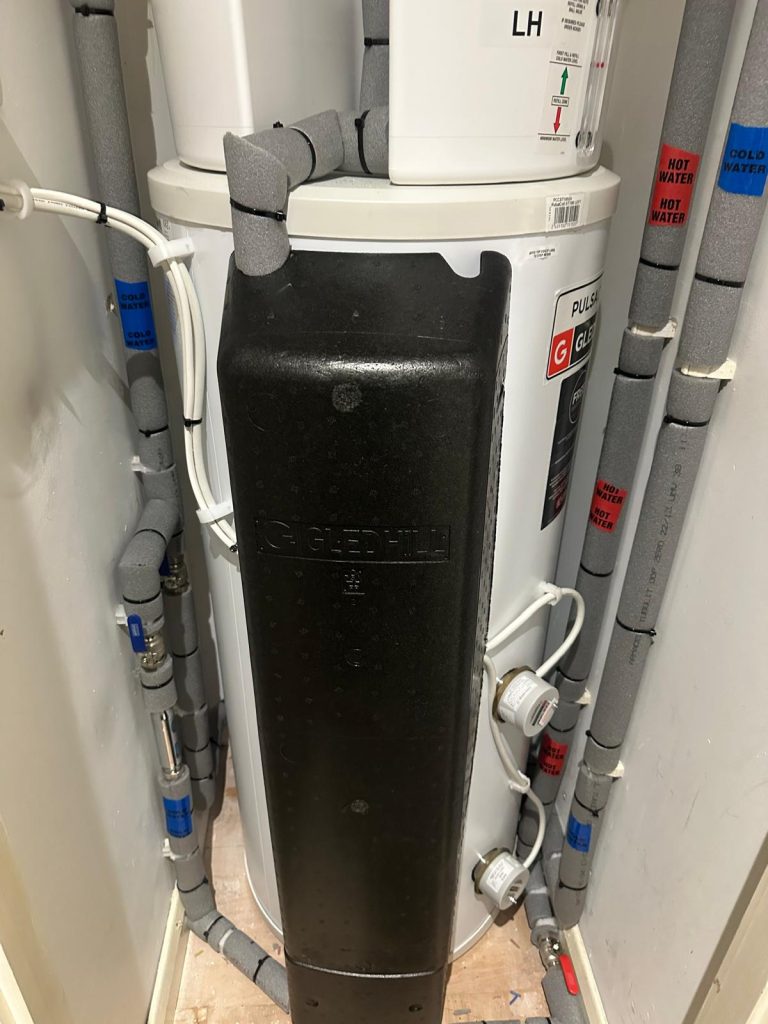
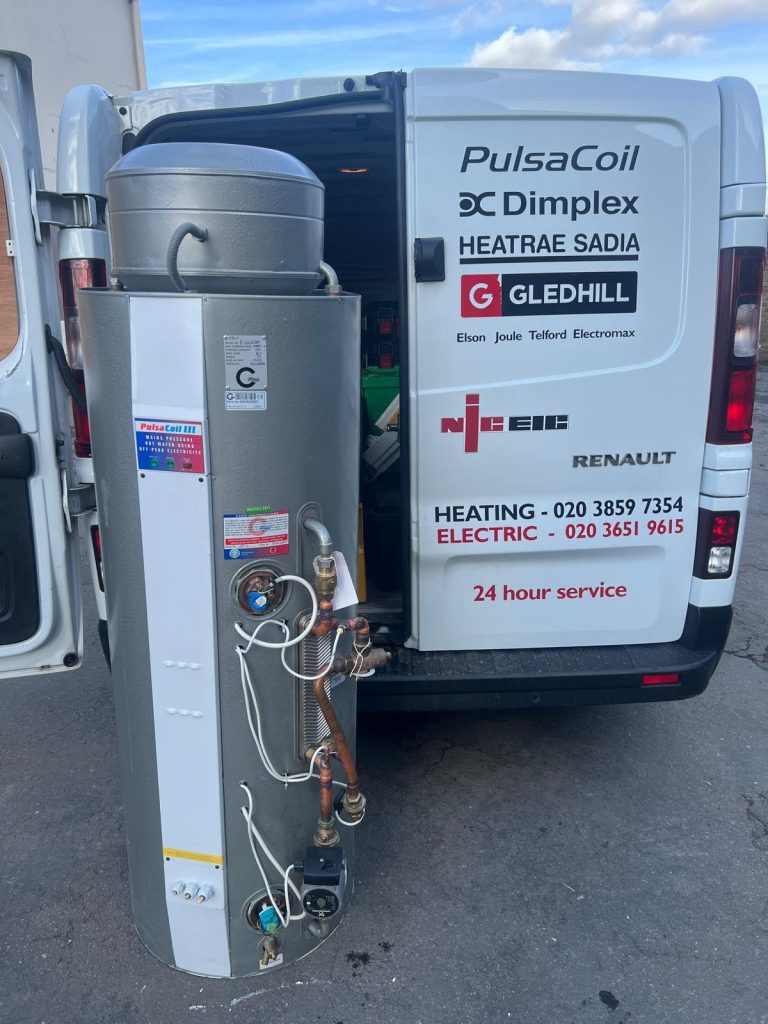
Tell the provider which model appears on the data label. The PulsaCoil range includes different layouts and components, so the model name helps the service team understand what equipment is at the property.
Ask directly whether an appointment is available for your address and whether the engineer can assess your model. A provider may serve Greater London without having an available appointment for every location or date.
Once attendance is confirmed, check practical details that could affect the visit. Confirm the appointment window and any access arrangements directly before setting aside time.
Common PulsaCoil Fault Symptoms
Loss of hot water, inconsistent temperature, leaks, electrical trips and flashing controls are all reasons to request an assessment. These signs point to a problem, but they do not identify a confirmed fault on their own.
The same symptom can have several causes. Immersion heaters, thermostats, sensors, control boards, pumps, valves, pipework and limescale can all affect how the system works.
Use the table to describe what you notice, not to diagnose the component yourself. A clear account of when the problem began can help an engineer assess what to check.
| Symptom | Possible fault area | What to do next |
|---|---|---|
| No hot water | Immersion heater or controls | Request an assessment |
| Weak or fluctuating hot water | Thermostat, sensor or scaling | Describe the temperature changes |
| Leaks | Valve, seal or pipework | Limit water damage and report it |
| Electrical trips or flashing lights | Electrical controls or a component fault | Arrange an electrical assessment |
| Unusual noise | Pump, valve or trapped air | Note when the noise occurs |
Weak or changing hot water may relate to heat transfer, controls or flow, while a visible leak can come from several joints or components. Flashing lights are a warning to have the system checked, not a reliable code unless the model’s instructions identify them.
If an electrical trip occurs, do not keep resetting it to restore hot water. Repeated trips can signal an electrical fault that needs proper assessment. Treat an active leak or recurring electrical trip as urgent and avoid opening the unit yourself.
How Engineers Diagnose and Repair PulsaCoil Faults
A PulsaCoil fault is traced through its electrical controls, immersion heater, circulation pump and heat-transfer path. The checks help distinguish a failed part from a wider issue affecting the system.
An engineer may inspect the electrical supply, control board, thermostat, valves, heat exchanger and expansion tank. They can also look for leakage, low water levels or signs of scaling that may be reducing performance.
- Electrical supply and controls
- Immersion heater and thermostat
- Pump and circulation
- Heat exchanger and blending valve
- Leaks, water level and scaling
A coil or plate heat exchanger transfers heat from the stored water to mains water. The stored water does not become the same water that reaches your taps.
On the PulsaCoil BP and 111, a blending valve delivers water at 55°C. On applicable models, an overheat thermostat activates above 85°C, so the model affects which checks apply.
Resistance readings are diagnostic checks for an engineer, not instructions for household testing. An immersion heater reading of 19-20 ohms indicates failure, while pump resistance on specified models is typically 170-175 ohms.
Some models use an expansion tank to replace water lost through evaporation and accommodate expansion. A repair may involve replacing a faulty part, correcting a connection or addressing the cause of scaling. Do not reset an overheat cut-out until the cause of the high temperature has been checked.
PulsaCoil Models, Parts and Repair Compatibility
The model label, not just the PulsaCoil name, determines which parts and circuit layout apply. Parts for the Gledhill range are not interchangeable simply because two units share the same broad name.
The BP is the only model still in production. The 111, A Class and 2000 are discontinued, but spare parts remain available for discontinued models.
| Model | Production status | Model-specific fault areas |
|---|---|---|
| PulsaCoil BP | In production | Blending valve, rod thermostat |
| PulsaCoil 111 | Discontinued | Blending valve, relay, PCB, pump |
| PulsaCoil A Class | Discontinued | Relay, rod thermostat, PCB, pump |
| PulsaCoil 2000 | Discontinued | Rod thermostat, PCB, pump |
The fault areas in the table are model-specific points to check, not a diagnosis of your unit. A repairer still needs to identify the fault and match any spare part to the exact equipment fitted.
You may also encounter the names PulsaCoil III or 3, Eco, PCR, 3D, Punch Bag and ThermaCoil. The wording “pulsacoil class pulsacoil” is not a model name, so use the data label rather than an informal description when discussing parts.
Even a familiar component name can refer to different versions or connections. A clear label helps prevent confusion between a model family and its generation. Photograph the data label clearly so an engineer can check the exact generation before attending.
When to Repair a PulsaCoil and When to Replace It
A repair is worth assessing when one replaceable component has failed and the thermal store itself remains sound. Replacement merits consideration if damage is extensive, faults keep returning or the capacity no longer suits the household.
Capacity matters when several people need hot water at similar times. An undersized store can leave residents short and may be overworked, which can lead to more frequent repairs or early failure.
| Consumption level | Estimated daily use per person |
|---|---|
| Low | 20-30 litres |
| Average | 30-50 litres |
| High | 50-70 litres |
These daily-use estimates differ from a sizing allowance of 35-45 litres per resident. Sizing depends on residents’ habits and simultaneous demand, so neither figure alone sets the right cylinder capacity.
As a guide, a shower uses about 18 litres per minute at 40°C, equivalent to 11 litres at 60°C. A bath uses about 100 litres at 40°C, equivalent to 60 litres at 60°C.
A guidance calculation gives a standard four-person household a minimum 200-litre tank. Treat that figure as an estimate, not a guaranteed sizing specification, because actual use and demand patterns differ between homes.
Compare the price and likely costs of a repair with the condition and capacity of the existing store. Ask the installer to confirm the required size for your household. Before approving a replacement, ask the installer to document the household demand calculation and confirm the manufacturer’s warranty conditions.
Booking a Repair and Understanding the Quote
A repair quote should itemise diagnosis, labour and parts before you approve the work. The total price depends on the fault, access, required parts and whether replacement is needed.
For the contact number for PulsaCoil repair in Orpington, use the provider’s current contact page. Pulsacoil Repair London provides contact details and an online booking route on its site; use those current details rather than an unverified number.
When booking a service, give the provider enough information to identify the equipment and understand the problem. A short, accurate description can help the team plan the visit without assuming a cause.
- Full address and postcode
- Model label or photograph
- Symptoms and when they began
- Any leak, electrical trip or access restriction
Orpington is in the London Borough of Bromley, so include the complete address when asking about an appointment. Confirm the appointment time and any access needs with the provider before arranging to be at home.
Ask for a written quote that separates diagnosis, labour, parts and any call-out charge. Check whether VAT and follow-up work are included, and make sure the description covers the work proposed.
Pricing can change if the assessment finds further faults or replacement is more suitable than a repair. Ask the provider to explain any change before agreeing to extra work. Confirm the warranty terms for the work and parts, since they can differ by repair. Keep the written quote and any agreed warranty terms with your system records.
Maintenance That Can Help Prevent Repeat Faults
Regular inspection can identify declining pump performance, leaks, scaling and electrical wear before a complete loss of hot water. Maintenance may help catch changes early, but it cannot prevent every breakdown.
Use an engineer for checks involving electrical controls or components inside the unit. Your own observations can also help: a new leak or a change in water performance is useful information to record.
- Arrange an annual pump inspection where the model uses a pump.
- Ask an engineer to inspect electrical controls and thermostats.
- Check for leaks and changes in hot-water performance.
- Ask whether scaling is affecting the heat exchanger, especially where hard water is a concern.
Pumps on specified PulsaCoil models should be inspected annually; not every arrangement uses the same pump. The PulsaCoil BP, A Class and 2000 have rod thermostats, so the engineer can check the component fitted to your model.
Limescale can hinder heat transfer through a plate heat exchanger. If hot water performance changes, scaling is one possible cause, but an inspection should establish whether it is responsible.
Keep the service record with details of the work completed and any parts replaced. This makes it easier to compare performance over time without assuming that every change has the same cause.
Maintenance can reduce avoidable strain, though parts still wear and electrical faults can occur between visits. Ask the service provider how the work relates to your manufacturer’s warranty, and check your own terms before relying on cover. Record the service date and any replaced parts so changes in performance can be compared at the next visit.
Arrange a PulsaCoil Assessment in Orpington
A clear fault description and an exact model label help an engineer assess the right next step. Tell the provider what has changed, when it began and which model appears on the data label.
To arrange Pulsacoil Repair Orpington, use the provider’s current contact or booking route. Confirm that the service attends your Orpington postcode and share the model information before agreeing an appointment.
Describe the main problem plainly, without guessing which component has failed. This helps the provider decide what information the engineer may need for an assessment.
Ask what the assessment covers and request a written quote before agreeing to work. Do not assume same-day attendance, a fixed price or a particular warranty unless those terms are confirmed in writing.
Having a repair assessed can give you a clearer basis for deciding whether to keep the existing unit. Request a local assessment and wait for a written quote before authorising repair or replacement.
FAQ
Is a PulsaCoil a boiler or a hot-water cylinder?
A PulsaCoil is an electric thermal store, not a conventional boiler or the household’s hot-water cylinder. It stores heated water and transfers heat to mains water through a heat exchanger. The water held in the store is separate from the water delivered at your taps. This arrangement means its faults and components differ from those of a standard boiler.
How can I find the model of my Gledhill PulsaCoil?
Find and photograph the data label on the unit, then use its exact model name. Labels may identify models such as BP, A Class or 2000, which have different components and layouts. A clear photograph can help an engineer identify the generation before attending. Avoid relying on appearance alone, since similar units may use different parts.
Can a discontinued PulsaCoil still be repaired?
Yes, a discontinued PulsaCoil may still be repairable because spare parts remain available for the 111, A Class and 2000. The exact repair depends on the fault and whether a compatible part can be matched to the unit. A model label helps identify the correct version. Discontinued status alone does not mean the whole system needs replacement.
Is it safe to reset a PulsaCoil overheat thermostat myself?
No, do not reset an overheat thermostat before the cause of the high temperature has been checked. On applicable models, the thermostat activates above 85°C. A reset does not explain why the unit overheated, and the fault may remain. Leave the assessment to a qualified engineer rather than opening the unit or repeatedly trying to restore operation.
How often should a PulsaCoil pump be inspected?
Pumps on specified PulsaCoil models should be inspected annually. Not every model uses the same pump arrangement, so the model label helps establish which checks apply. An engineer can look for signs of declining circulation during inspection. If you notice a change between visits, record when it happens and tell the service provider.
Can limescale cause low hot-water flow from a PulsaCoil?
Yes, limescale in a plate heat exchanger can affect heat transfer and may contribute to poor hot-water performance. Low flow can also have another cause, so scaling should not be assumed from the symptom alone. An engineer can inspect the heat-transfer path and confirm the fault before replacing parts. Water hardness can affect how relevant scaling is in your home.