
Pulsacoil Repair Notting Hill is a local service for diagnosing faults in Gledhill PulsaCoil systems that have stopped delivering reliable hot water. Homeowners, landlords and managing agents can seek help when their system no longer meets the property’s needs. A diagnosis should come before any decision about repair.
The service focuses on properties in Notting Hill and nearby areas, with coverage confirmed by postcode. A faulty hot-water system can disrupt everyday routines, so clear information helps an engineer understand what needs attention. The model and the property location are useful starting points.
Each system has its own components and history, so an inspection can help establish the likely cause before work is agreed. Have the model name and postcode ready when asking about an inspection.
How a PulsaCoil thermal store delivers hot water
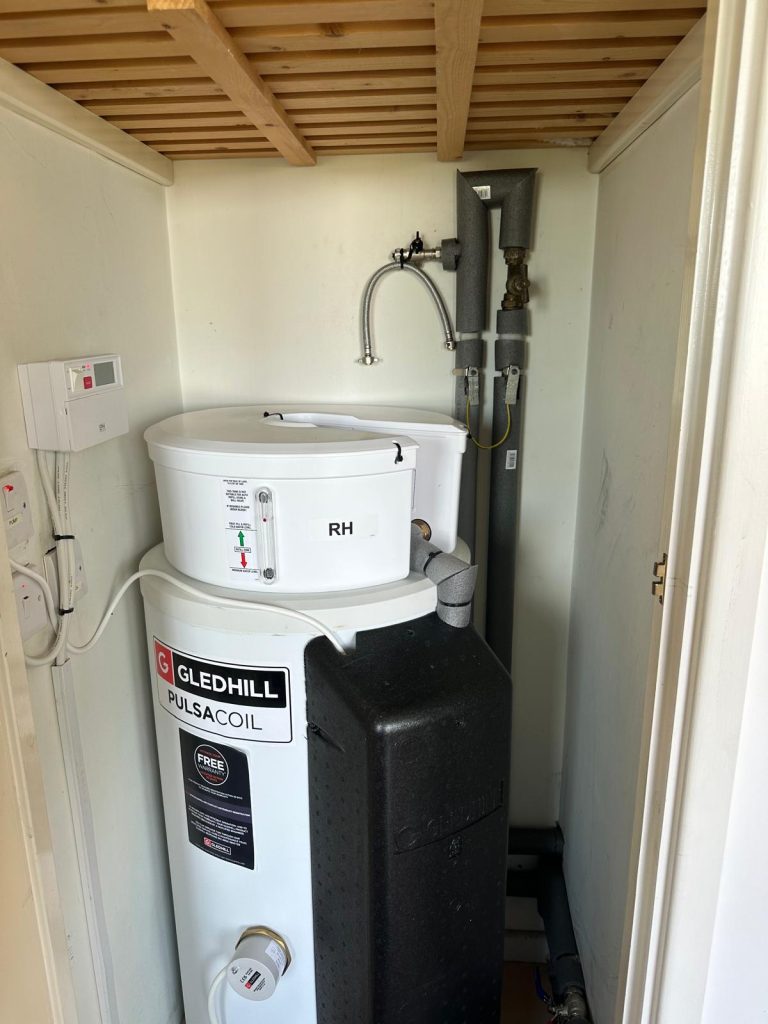
A PulsaCoil thermal store heats domestic hot water by transferring heat from stored primary water through a plate heat exchanger. A thermal store is a vessel that stores heated primary water and transfers its heat to mains water through a heat exchanger.
The tap water does not sit inside the thermal store. Instead, mains water passes through the plate heat exchanger, where it receives heat from the primary water. This separation is important: the system stores heat, not the domestic water you use at the taps.
Primary water circulates from the store through the plate heat exchanger under the control of a pump speed control board or a blending valve. The exact arrangement depends on the model. A control board can regulate pump speed, while a blending valve manages the temperature of water delivered from the store.
This design can deliver hot water at mains pressure, because domestic water comes directly from the mains supply and receives heat as it passes through the exchanger. The primary water remains within the heating circuit. A fault in circulation or temperature control can affect how well heat transfers, even when the store contains heated primary water.
Gledhill PulsaCoil models include PulsaCoil 3, PulsaCoil 2000, PulsaCoil A-Class and PulsaCoil BP. Their controls and component layouts can differ, so a general description cannot identify the correct repair for every pulsacoil thermal store.
The model name helps an engineer identify which controls and components to check.
Symptoms that point to a PulsaCoil fault
A sudden loss of hot water is a clear reason to arrange a fault check, but the symptom alone does not identify the failed component. Several faults can produce similar results on a Gledhill PulsaCoil, including models such as ECO, BP and A-Class.
Note when the problem occurs and whether it affects the heating as well as the taps. Include any change in sound, pressure or electrical behaviour. These details give an engineer a clearer account of what happened without treating a symptom as a diagnosis.
| Symptom | Possible area to investigate | What to note | Safe next action |
|---|---|---|---|
| No or weak hot water | Heating controls or circulation | When hot water stopped | Arrange an engineer’s check |
| Water too hot | Temperature control | Whether the change is constant | Stop using excessively hot taps |
| Tripping electrical supply or booster failure | Electrical parts or booster circuit | When the supply trips | Do not keep resetting it |
| Leak, unusual noise or low pressure | Connections or circulation | Where and when it occurs | Seek qualified help |
A hot-water problem may appear alongside a heating change, or it may affect the taps alone. Record which outlets are affected and whether the issue started suddenly or developed over time. A booster that does not work can also have more than one possible cause.
Water around the unit deserves particular care, especially if electrical parts are nearby. Do not open the casing or attempt to test internal components yourself. Stop using a system that is visibly leaking near electrical components and seek qualified help.
What an engineer checks during diagnosis
A sound diagnosis starts by confirming the reported symptom and identifying the exact PulsaCoil model. Testing helps an engineer distinguish between a failed part and a problem elsewhere in the system, rather than changing components based on guesswork.
The checks vary with the fault and model. A PulsaCoil 2000 and a PulsaCoil A-Class can have different controls or component layouts, so the engineer should identify the appliance before selecting tests or parts.
- Establish the reported fault and read the model details on the unit’s label.
- Inspect the appliance, accessible connections and visible pipework for damage or signs of leakage.
- Carry out appropriate electrical checks, including relevant tests under BS 7671.
- Test controls and circulation components, which may include the immersion heater, thermostat, PCB or circulation pump.
- Run a controlled heating cycle and verify operation before recommissioning the system.
Electrical checks need to suit the reported problem and the equipment being tested. Electrical work must be carried out safely by a qualified person, using suitable procedures and test equipment. The engineer may need to isolate the system before examining electrical components.
A useful explanation connects the test result to the proposed work. For example, a check may show whether a control is calling for heat or whether circulation is occurring as expected. The exact result matters more than the name of a part on its own.
Ask the engineer to explain which test supports the proposed repair.
Repair or replacement for an ageing unit
A repair is worth considering when testing identifies a contained fault and the rest of the unit remains serviceable. Replacement may be more practical when wider deterioration, repeated faults or unavailable parts make continued repairs difficult to justify.
Age alone does not settle the decision. A clear diagnosis and written quotation help you compare the work required with the cost and scope of a replacement proposal. Suitable parts may not be available for every model.
| Decision factor | Repair may suit when | Replacement may suit when | What to confirm |
|---|---|---|---|
| Overall condition | The unit remains serviceable | Several areas show deterioration | Condition beyond the failed part |
| Fault extent | Testing identifies a contained fault | Damage affects several components | Findings from the diagnosis |
| Suitable parts | A compatible part is available | A suitable part cannot be sourced | Part fit and availability |
| Likely future repair needs | Further work appears limited | Repeat repairs are likely to add up | Known repair history and risks |
Ask what the quotation includes, such as labour, parts and any testing after the work. The comparison should use the same scope wherever possible. A replacement proposal may include work beyond the appliance itself, so check what is included before comparing figures.
PulsaCoil 2000 and A-Class are examples of models that may be considered for repair or replacement. Neither model is automatically repairable or beyond repair simply because of its name or age. The condition, fault and access to suitable parts all matter.
Make the decision only after comparing the diagnosed fault with the full replacement proposal.
Servicing, parts and common repair work
Servicing and repair work can cover electrical controls, heating components and the water connections around the thermal store. The work depends on the model and its condition, so an engineer should confirm which checks are relevant to your unit.
Routine maintenance can help identify developing faults before they cause a larger interruption. It cannot guarantee that a breakdown will not occur. An inspection also gives you a chance to discuss the condition of parts and the history of previous work.
- Check the immersion heater and thermostat for operation and condition.
- Trace sensor readings and investigate possible PCB faults.
- Check the circulation pump and its operation within the system.
- Inspect valves and pipework for leaks or other visible concerns.
- Assess replacement parts for condition, compatibility and suitability.
Common components considered during Gledhill PulsaCoil service work include immersion heaters, thermostats, sensors, PCBs, circulation pumps, valves and pipework. A failed part is not always the only cause of a fault, so the surrounding controls and connections may also need attention.
Model examples include PulsaCoil 3D, ECO and Stainless. Their layouts and parts can differ, and a part that fits one version may not suit another. The engineer should check the model details before recommending a replacement.
Ask what the service covers and whether the engineer found any developing concerns. A note of the work completed can help you keep a useful record for future maintenance. Confirm that any proposed part is suitable for the exact model before agreeing to its replacement.
Book Pulsacoil Repair Notting Hill
A useful booking request gives the engineer the W11 postcode, model name and a concise description of the hot-water problem. Appointment availability depends on the property’s location and current demand, so confirm both coverage and timing for your postcode.
The price depends on the diagnosed fault, labour involved, required parts and access to the unit. A clear quotation can be provided before work begins. Ask for the quotation and agree what it covers before authorising any repair.
- Postcode for the property.
- Model name or a photograph of the label.
- Clear description of the fault and when it started.
- Access details for the unit, including any entry arrangements.
Notting Hill includes the W11 postcode district, but postcode confirmation is still needed to establish whether the property is covered. The service can discuss a suitable visit once it has the location and basic fault information.
Access can affect how an engineer reaches the appliance and carries out the work. Mention steps, cupboards, restricted access or entry arrangements when booking. If the model label is difficult to reach, a clear photograph can help identify the system before the visit.
Confirm the visit window and agreed work before granting access.
Hard water, scale and thermal-store care
Water hardness matters because dissolved minerals can leave deposits on heating elements as water is heated. Scale is made from calcium and magnesium deposits that build up over time, shortening an element’s life and reducing appliance efficiency.
The Drinking Water Inspectorate groups hardness by the amount of calcium carbonate, shown as mg/l CaCO3. Its categories are soft up to 100 mg/l, slightly hard 100-150 mg/l, moderately hard 150-200 mg/l, hard 200-300 mg/l and very hard above 300 mg/l.
Water at 200 mg/l or higher, measured as CaCO3, will produce scale. Water at 100 mg/l or less is more corrosive to pipework. These are different concerns: the scale threshold does not mean that lower-hardness water presents no risks to the wider system.
Scale can collect on heating elements as water is heated, even when the build-up is not visible from outside the appliance. Deposits can reduce heat transfer and place extra strain on an element over time. A suspected scale issue should be assessed rather than treated based on hardness alone.
A thermal store has heating components that can be affected by deposits, but the right response depends on the measured water and the appliance’s condition. Do not assume that a water softener or another treatment is automatically needed. An engineer can consider the concern alongside the system’s construction and history.
Keep any water-hardness result with the property’s service information if it is available. The measurement helps distinguish scale risk from the greater corrosivity associated with water at the lower end of the range. Ask for the measured hardness and the condition of the heating components before choosing a response.
Support for landlords and managed properties
For a rental property, one named contact should coordinate access and collect the tenants’ description of the fault. A clear point of contact helps the engineer and residents arrange a suitable visit without relying on separate accounts of the problem.
Record when hot water became unreliable and whether residents have noticed a visible leak. Pass on the model details and any prior repair information when available. This background can help the engineer understand the property’s system history without replacing an inspection.
A property near Portobello Road or Westbourne Grove still needs its postcode checked for coverage. These local areas do not determine whether a particular property can be visited. Appointment availability depends on the postcode and current demand.
For occupied homes, agree how the engineer will enter and who will be present. Tell residents what access is needed and share any relevant entry instructions with the booking contact. If access changes, pass the update on before the agreed visit window.
Landlords and managing agents can keep the diagnosis and quotation with the property’s service information. Record the date of the visit, the findings and any agreed work. This gives the next person handling maintenance a clear account of decisions already made.
Where several people manage the property, share one written update after the visit. Include any parts recommended, work completed and points that remain unresolved. Keep the engineer’s findings with the property records for the next maintenance decision.
Restore reliable hot water in Notting Hill
A PulsaCoil problem is easier to address once the fault and model have been identified. A model-specific diagnosis can show whether a repair is practical or whether another option should be considered.
Contact the service to discuss the fault and confirm postcode coverage and appointment availability. Share the model details and a brief account of what has changed. Contact the service with your postcode and model details to ask about an inspection.
FAQ
How much does a PulsaCoil repair cost?
The cost depends on the diagnosed fault, labour, required parts and access to the unit. Those details shape the work and the quotation, so a price cannot be set from the model name alone. Request a clear quotation before work starts, and check whether it includes testing or any follow-up work as well as the repair itself.
How often should a PulsaCoil thermal store be serviced?
An annual check is a practical rule of thumb for a PulsaCoil thermal store. The timing may need to change with the unit’s age, how often it is used, its fault history and the engineer’s advice. Ask the engineer to explain what checks suit your model, and keep a record of the service and any work recommended.
Can an older PulsaCoil 2000 or A-Class still be repaired?
Yes, an older PulsaCoil 2000 or A-Class can still be repaired when its condition, fault type and access to suitable parts make the work practical. Age alone does not decide the outcome. Ask the engineer to explain the diagnosis, whether a compatible part is available and how the repair compares with a full replacement proposal.
Why does my PulsaCoil keep tripping the electric supply?
A PulsaCoil that repeatedly trips the electric supply may have a fault involving the immersion heater, thermostat, controls or wiring. The symptom does not identify which part has failed, and repeated resets can leave an unresolved electrical problem. Do not keep resetting the supply; arrange for a qualified person to test the system safely.
Can I keep using my heating if the PulsaCoil has stopped making hot water?
You may be able to use the heating, but it depends on the system arrangement and the fault. A hot-water problem does not prove that the heating circuit is safe or unaffected. Do not assume continued operation is suitable without an engineer’s assessment, particularly if you notice a leak or an electrical issue.
How quickly can an engineer attend in Notting Hill?
An engineer’s attendance time depends on your postcode, appointment availability and current demand. Notting Hill includes W11, but the postcode still needs to be checked for coverage. Give the booking contact your location and ask for the earliest suitable visit window, then confirm the agreed timing before arranging access.
Is it safe to use a leaking PulsaCoil?
A leaking PulsaCoil may be unsafe if water is near electrical parts, so stop using it and seek qualified help. Isolate the power only if you can do so safely without touching wet equipment. Do not open the casing or try to trace an internal leak yourself; explain where the water is visible when arranging assistance.