
A specialist PulsaCoil engineer can assess the fault and advise on the repair needed to restore dependable hot water in Peckham. A specialist diagnosis is the right starting point, since a cold tap, fault display or leak can have different causes. The work required depends on what the engineer finds at your property.
If your hot water has stopped, you may need help today, but a same-day visit cannot be promised. Appointment availability, the time needed for an assessment and the right work must be confirmed for your home. The price also depends on the diagnosis and any repair required.
Clear details can help the service team understand the problem before arranging an appointment. You can note when the fault began and whether the unit is still providing any hot water. Keep the model label and a short description of the fault to hand when arranging help.
Pulsacoil Repair Peckham: Arrange a Local Visit
Peckham is within the London Borough of Southwark, so give the booking team your full SE15 address to check local appointment availability. This service page is for arranging PulsaCoil help in Peckham, including repair and repair services for Gledhill units. A PulsaCoil engineer near you should be booked by confirming your property address, model and appointment availability with the service team.
Use the site’s booking or contact route to share your details and ask about a visit. Peckham includes the SE15 postcode district, but a general London service area does not guarantee a particular appointment slot. Give the full postcode, not just the area name, when checking whether an engineer can attend.
Tell the team which model you have, if you can read the label, and briefly describe the issue. This helps them understand the type of service you need without treating an initial description as a diagnosis. Mention any access limits, such as a locked cupboard or a unit in a shared space.
Ask how the diagnostic visit works and whether its charge is separate from repair work. Confirm whether a quote will be provided before any work begins, and what happens if you decide not to proceed. A service appointment and the cost of repairs are separate points to clarify.
Do not assume that an advertised price covers every fault or includes all parts and labour. The charge depends on the appointment terms and any work later agreed. Confirm the visit charge and what the diagnostic appointment includes before booking.
How a PulsaCoil Thermal Store Supplies Hot Water
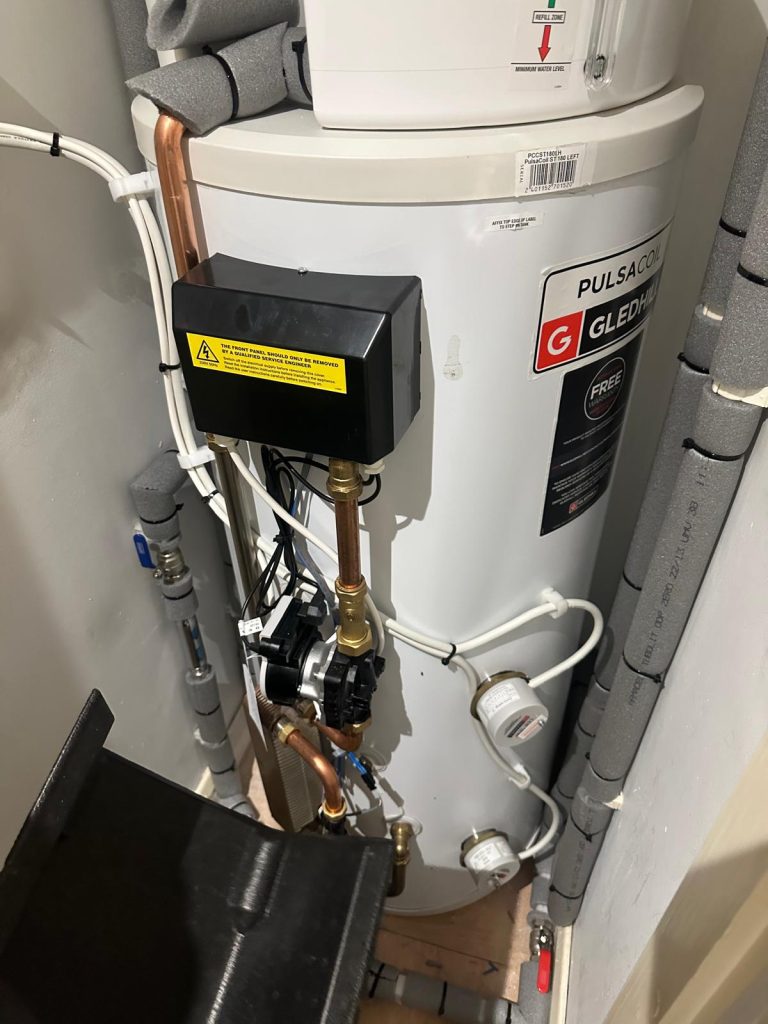
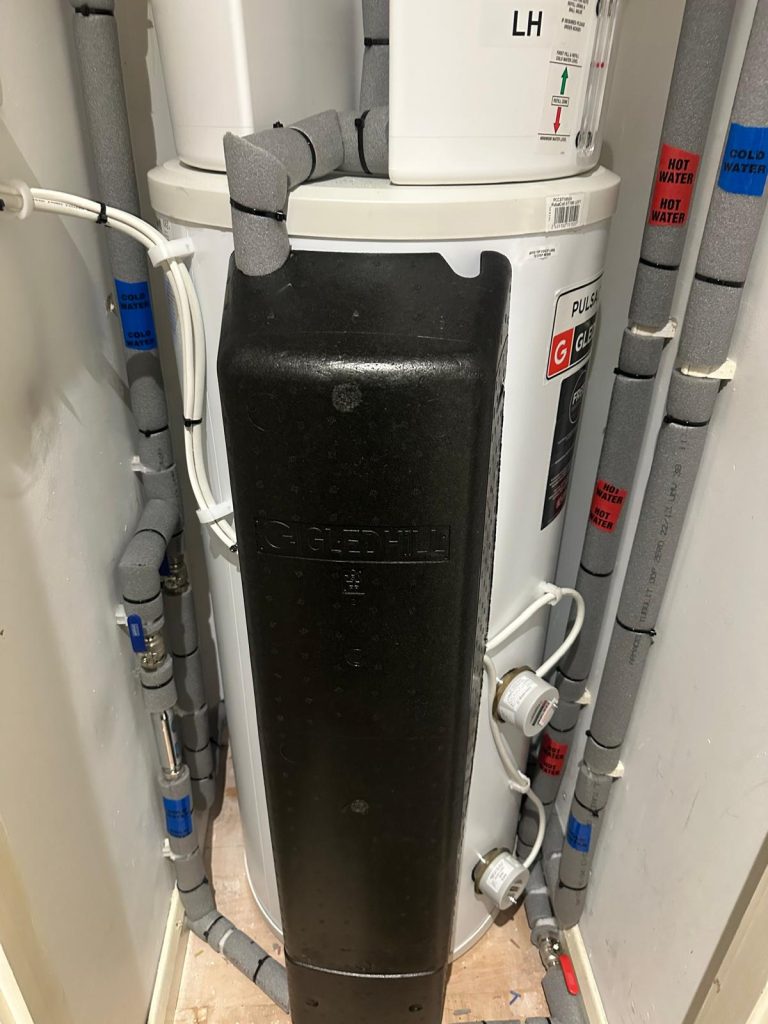
A PulsaCoil is an electric thermal store, not a conventional boiler, and it transfers stored heat to incoming mains water. A thermal store is a unit that stores heated water and transfers its heat to incoming mains water through a heat exchanger. The cylinder holds thermal-store water, while mains water is heated as it passes through a plate heat exchanger.
This arrangement supplies hot water at mains pressure to the taps and uses off-peak electricity to heat the store. Unlike a conventional boiler, the system does not directly heat mains water by burning gas. The stored water and the water you use at the tap remain separate.
Model names matter when you discuss repairs or spare parts. The BP is the only PulsaCoil model still in production. The 111, A Class and 2000 models are discontinued, though spare parts remain available for these models.
| Model | Production status | Parts and repair implication |
|---|---|---|
| BP | Still in production | Model-specific parts |
| PulsaCoil 111 | Discontinued | Spare parts available |
| PulsaCoil A Class | Discontinued | Spare parts available |
| PulsaCoil 2000 | Discontinued | Spare parts available |
Spare parts availability does not confirm that a particular part is currently in stock or compatible with your unit. The system’s age and precise model can affect the parts an engineer can use. Check the model label before asking about a part, since parts and controls differ between models.
Common PulsaCoil Faults and What They Can Mean
No hot water can result from a failed immersion heater or thermostat, but other electrical and water-level faults can produce the same symptom. Common Gledhill PulsaCoil problems can look alike from outside the unit, so symptoms alone cannot confirm which part needs repair. The following signs can help you describe what is happening.
- No hot water: a faulty immersion heater or thermostat may be responsible.
- A leak: a valve, pipe or tank issue may be allowing water to escape.
- Unusual noise: trapped air or a pump problem could be involved.
- Flashing lights or an error code: an electrical or sensor fault is possible.
Overheating or underheating can also point to a thermostat or sensor problem. An empty expansion tank is a fault sign that may indicate low water or a leak. It is not a reason to refill or dismantle the system yourself.
Every PulsaCoil model uses an immersion heater. A competent engineer may measure 19-20 ohms across its terminals as part of diagnosis, but this is not a DIY test. Electrical resistance readings require safe access and suitable equipment.
Leaks can affect nearby electrical parts as well as the unit’s water supply. If water is leaking near electrical components, keep clear and arrange a qualified assessment rather than opening the unit.
Model-Specific Components and Repair Decisions
The likely fault depends partly on the model: for example, the BP and 111 use a blending valve, while the 111 and A Class can develop relay faults. A worn or incorrectly adjusted blending valve can reduce hot-water flow. The valve mixes water to 55°C on the BP and 111.
A relay fault is one possible issue on the 111 and A Class. Rod thermostat faults can affect the BP, A Class and 2000. These differences make the exact model name useful when an engineer decides which parts and controls to inspect.
The 111, A Class and 2000 use a PCB, or electrical control board. A failed PCB is replaced rather than repaired. The overheat thermostat switches off the immersion heater above 85°C, and the original cause needs checking before any reset.
Pumps in the 111, A Class and 2000 should be inspected annually by an engineer. Their resistance is typically 170-175 ohms, an engineer-level diagnostic detail rather than a homeowner test. A class PulsaCoil and the PulsaCoil class models can have different component layouts, so avoid assuming parts are interchangeable.
A PulsaCoil 2000 has its own control and pump requirements, as do other models. Give the engineer the exact model name so they can check the relevant components and compatible parts.
Thermal Store Sizing and Routine Checks
A useful starting guideline is 35-45 litres of thermal-store capacity per resident, adjusted for the household’s actual bathing and showering habits. Daily demand varies with how often people wash and the type of shower or bath they use. The installer is responsible for calculating the correct cylinder size.
| Daily-use category | Litres per person per day | Four-person daily total |
|---|---|---|
| Low | 20-30 litres | 80-120 litres |
| Average | 30-50 litres | 120-200 litres |
| High | 50-70 litres | 200-280 litres |
Separately, the sizing guidance gives a four-person household a minimum 200-litre tank. These daily-use figures describe estimated demand, while tank capacity describes stored volume. Sizing calculations are used by the EU energy labelling scheme.
A shower uses about 18 litres per minute at 40°C, equivalent to 11 litres at 60°C. A bath uses about 100 litres at 40°C, equivalent to 60 litres at 60°C. The different figures reflect the water temperature: hotter stored water is mixed with cold water for use.
An undersized thermal store can leave residents short of hot water and make the unit work harder. Incorrect sizing can also affect warranty terms and create Building Regulations complications. Routine maintenance should include checking the system’s condition and water level through a competent professional.
Ask the installer to confirm the proposed capacity against everyone’s daily hot-water use before agreeing to a replacement.
Repair, Replacement and Getting a Clear Quote
A repair is worth assessing first when the fault and compatible part can be identified, while replacement may be more suitable if the unit’s condition or capacity is the problem. The choice depends on the diagnosis, the parts required and the likely scope of work. Age alone does not establish whether a repair is suitable.
A plate heat exchanger transfers heat between thermal-store water and incoming mains water. An expansion tank replenishes water lost through evaporation and allows for volume changes as the water heats. Faults involving either component can change the work needed, so an estimate should explain what the engineer has identified.
Before authorising work, check that the quote sets out the main charges clearly:
- Diagnostic or call-out fee, including when it applies.
- Whether the pricing is fixed or charged by the hour.
- Whether parts and labour are included or listed separately.
- Warranty terms for the specific repair or replacement work.
The price depends on the diagnosed fault, compatible parts and work involved. A replacement PulsaCoil may need consideration if repeated faults, poor condition or unsuitable capacity make further repairs unwise. Compare the proposed work with the unit’s needs, not just the headline price.
Ask for the total charge and the parts-and-labour breakdown in writing before authorising work.
What to Prepare Before Booking a Repair
A clear model name and symptom description are the most useful details to have ready when booking. You can find the model name on the unit label, which may show PulsaCoil 2000, A Class or BP. Clear information helps the team prepare, but it cannot confirm a diagnosis or guarantee a particular appointment time.
Before contacting the team, gather these four details:
- The model name shown on the unit label.
- The exact symptom and when it began.
- Any display light or error code you can see.
- Whether the unit is leaking or has had related work before.
A note that says “PulsaCoil hot water has stopped” is more useful when it includes when the issue began. Do not expect a visit within hours, since appointment timing depends on availability. This information helps engineers prepare without promising a diagnosis or outcome in advance.
Electrical Safety First advises using a competent professional for electrical repairs. Do not remove covers or test wiring before an appointment. Electrical checks and repairs should be left to a competent professional.
If the unit is leaking or showing an electrical fault, tell the booking team before the visit so they can advise on safe next steps.
Get Your Peckham Hot Water Restored
A clear fault description and the model label can help the team understand what needs assessing. Contact the site team through its booking or contact route with your address, model and fault description. Ask whether an appointment is available for your property and confirm the charges that apply before authorising any work.
A specialist service can assess whether repairs suit the unit and its condition. Contact the team to check availability and arrange a PulsaCoil assessment for your Peckham property.
FAQ
Can a discontinued PulsaCoil still be repaired?
Yes, a discontinued PulsaCoil can sometimes be repaired if a compatible part is available and the unit’s condition allows it. Spare parts are available for the 111, A Class and 2000 models, but this does not confirm that every part is in stock or suitable. The exact model and failed component determine the repair options.
Does an error code identify the failed part?
No, an error code does not by itself confirm which component has failed. The code can help an engineer narrow down the likely cause, but it needs to be considered alongside the unit’s symptoms and test results. Record the code exactly as displayed, including any letters, numbers or flashing pattern.
Can I reset a PulsaCoil overheat thermostat myself?
No, leave the overheat thermostat and related electrical checks to a competent professional. The cause of overheating should be checked before any reset, since a reset alone does not establish that the underlying problem has been resolved. The thermostat switches off the immersion heater above 85°C.
How often should the PulsaCoil pump be inspected?
The pump in a 111, A Class or 2000 model should be inspected annually by an engineer. The engineer can assess its condition and operation as part of the inspection. A typical resistance reading for these pumps is 170-175 ohms, but checking resistance is a professional diagnostic task, not a homeowner test.
Can a PulsaCoil operate if its expansion tank is empty?
An empty expansion tank indicates a fault, such as low water or a leak, and should be assessed by a qualified professional. The tank helps replenish water lost through evaporation and accommodates changes in volume as water heats. Do not try to refill it yourself, since the cause of the low level needs to be identified.
Is repair or replacement better for an older PulsaCoil?
Repair is more suitable when the fault can be identified, a compatible part is available and the unit remains in sound condition. Replacement may be more appropriate if the unit has repeated faults or its capacity does not suit household demand. The decision should follow an assessment of the fault, parts, condition and required hot-water capacity.