A Gledhill Pulsacoil fault in Perivale needs an engineer to assess the unit and advise whether it can be repaired. Losing hot water disrupts washing, bathing and daily routines, so a clear diagnosis helps you decide what to do next.
A thermal store is an insulated vessel that stores heated water and transfers heat to domestic hot water. A fault can involve a serviceable component or damage that needs a different remedy. An engineer familiar with these units can inspect the appliance, explain the likely cause and discuss whether a repair is suitable. No repair outcome can be confirmed before an assessment.
For a local repair, arrange a visit through the service’s current contact or booking route. Describe the loss of hot water and any other change you have noticed, without opening the casing. This helps the service team understand the situation before an engineer attends. Note the model label before arranging a visit, since the model helps identify the unit.
Common Gledhill Pulsacoil faults and what they may mean
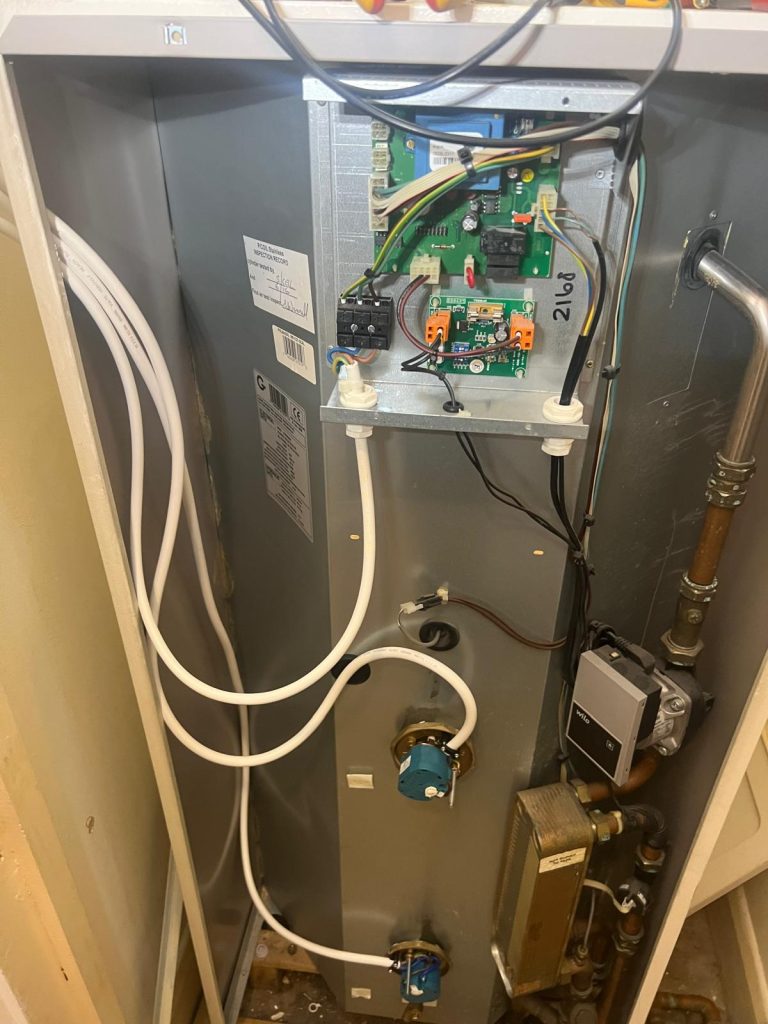
A Pulsacoil can lose hot water because of an immersion-heater or sensor fault, while a leak or a rusted cylinder needs a different assessment. The symptoms below can help you describe the problem, but none confirms a diagnosis.
- No hot water.
- A leaking unit.
- Immersion-heater failure.
- Hot-water sensor failure.
- Depleted water in the thermal store.
- A cylinder rusted through.
These faults have different possible causes and may call for different parts or repair work. For example, a failed immersion heater affects heating, while a leak may point to damage within the unit. A cylinder rusted through needs an engineer to assess its condition and advise on the next step.
Do not treat a symptom as proof that a particular spare part has failed. The engineer can inspect the unit and determine whether repair is suitable. Water-damaged electrical equipment can pose a shock or fire risk if power is restored without proper evaluation. The Electrical Safety Foundation International’s water-damaged electrical equipment guidance explains why assessment matters.
If water is near electrical components, leave the casing closed and arrange an engineer’s assessment.
Pulsacoil Repair Perivale: how a repair visit works
A repair visit is easier to arrange when you can give the service team the model name and a concise description of the fault. Tell them what has changed in the hot-water supply, including whether it stopped suddenly or became unreliable over time.
The named range includes PulsaCoil Punch Bag, PulsaCoil 3, PulsaCoil 2000, PulsaCoil A Class, PulsaCoil BP, PulsaCoil PCR and ThermaCoil. Compare the name on your unit label with this range when you contact the service team.
This service page covers Gledhill Pulsacoil repair in Perivale, within the London Borough of Ealing. For a Gledhill Pulsacoil repair in Perivale, find the current contact number on the website’s contact or booking page. Use that route to book repair and share your details with the team.
A repair specialist can assess the unit and explain the work needed. Any quote depends on the diagnosis, the spare part required and labour charges. Ask whether the proposed charge is a standard rate repair or a fixed-price repair, and what each option covers. Do not assume either describes the work until the terms are clear.
Before agreeing to the work, confirm the quoted charge and whether it includes both parts and labour.
Repair, spare parts or replacement: how to decide
Repair is worth assessing when the fault is in a serviceable component, but a cylinder that has rusted through may call for replacement advice. Before work is agreed, the engineer should confirm whether the unit can be repaired and whether the required spare part is suitable.
A correctly sized thermal store helps match stored hot water to household demand. A sizing guide allows 35-45 litres per resident. A shower uses about 18 litres per minute at 40°C, equivalent to 11 litres at 60°C. A bath uses about 100 litres at 40°C, equivalent to 60 litres at 60°C.
Daily use guides are 20-30 litres per person for low consumption, 30-50 litres for average consumption and 50-70 litres for high consumption. Using these calculations, a four-person household would need a minimum 200-litre hot-water tank. The calculations are used by the EU energy labelling scheme, but household habits affect actual demand.
These figures are guidance, not an individual design calculation. An undersized thermal store can leave you short of hot water, become overworked, need frequent repairs and break down early. Incorrect sizing can also affect the manufacturer’s warranty and Building Regulations compliance, depending on the circumstances.
Ask the engineer to consider household hot-water use as well as the condition of the existing cylinder.
Book a Pulsacoil engineer in Perivale
To arrange an assessment in Perivale, have the unit’s model label and a short description of the problem ready. Your postcode helps the service team identify the location for the visit. The clearer your details, the easier it is to discuss the fault and the support you need.
Use the website’s contact or booking route to request an expert repair service. You can ask what the assessment involves before you agree to any work. A diagnosis gives you a basis for deciding whether to repair the unit or consider another option, without assuming a particular outcome, price or visit time.
Use the website’s current contact or booking details to request a visit.
FAQ
How much does a Pulsacoil repair in Perivale cost?
The charge depends on the diagnosed fault, the required parts and the labour involved. A simple component repair may need different work from an assessment of cylinder damage. Ask for the full quote and terms, including whether the price covers both parts and labour, before agreeing to any work.
Can a leaking Pulsacoil be repaired?
A leaking Pulsacoil needs an engineer’s assessment, because the source and extent of the leak affect the repair decision. A fault in a serviceable component may be repairable. If the internal cylinder has rusted through, it may not be repairable and could require replacement advice instead.
Which Pulsacoil models can an engineer assess?
An engineer can assess models in the named range, including PulsaCoil 3, PulsaCoil 2000, A Class, BP, PCR and ThermaCoil. The range also includes PulsaCoil Punch Bag. Check the unit label for the exact model name, then give that name to the service team when you arrange an assessment.
How long does a Pulsacoil repair visit take?
A Pulsacoil repair visit has no fixed duration, because the time depends on the diagnosis, access to the unit and whether a spare part is needed. An assessment may identify work that cannot be completed during the same visit. Ask the service team what to expect once they know the fault and parts involved.
Is it safe to open a Pulsacoil that has stopped heating?
No, do not open the casing or handle wiring when a Pulsacoil has stopped heating. Water near electrical components makes professional assessment especially important. A stopped unit can have several possible causes, and opening it yourself can expose you to electrical hazards. Keep the casing closed and arrange an engineer’s assessment.
Does a small thermal store explain why the hot water runs out?
Yes, an undersized thermal store can contribute to insufficient hot water, though household demand also matters. A guide of 35-45 litres per resident can help frame the question, but it is not an individual design calculation. Shower length, bath use and other daily hot-water habits affect the amount your household needs.